
Waiting for Spring
Learning from Slow Productivity

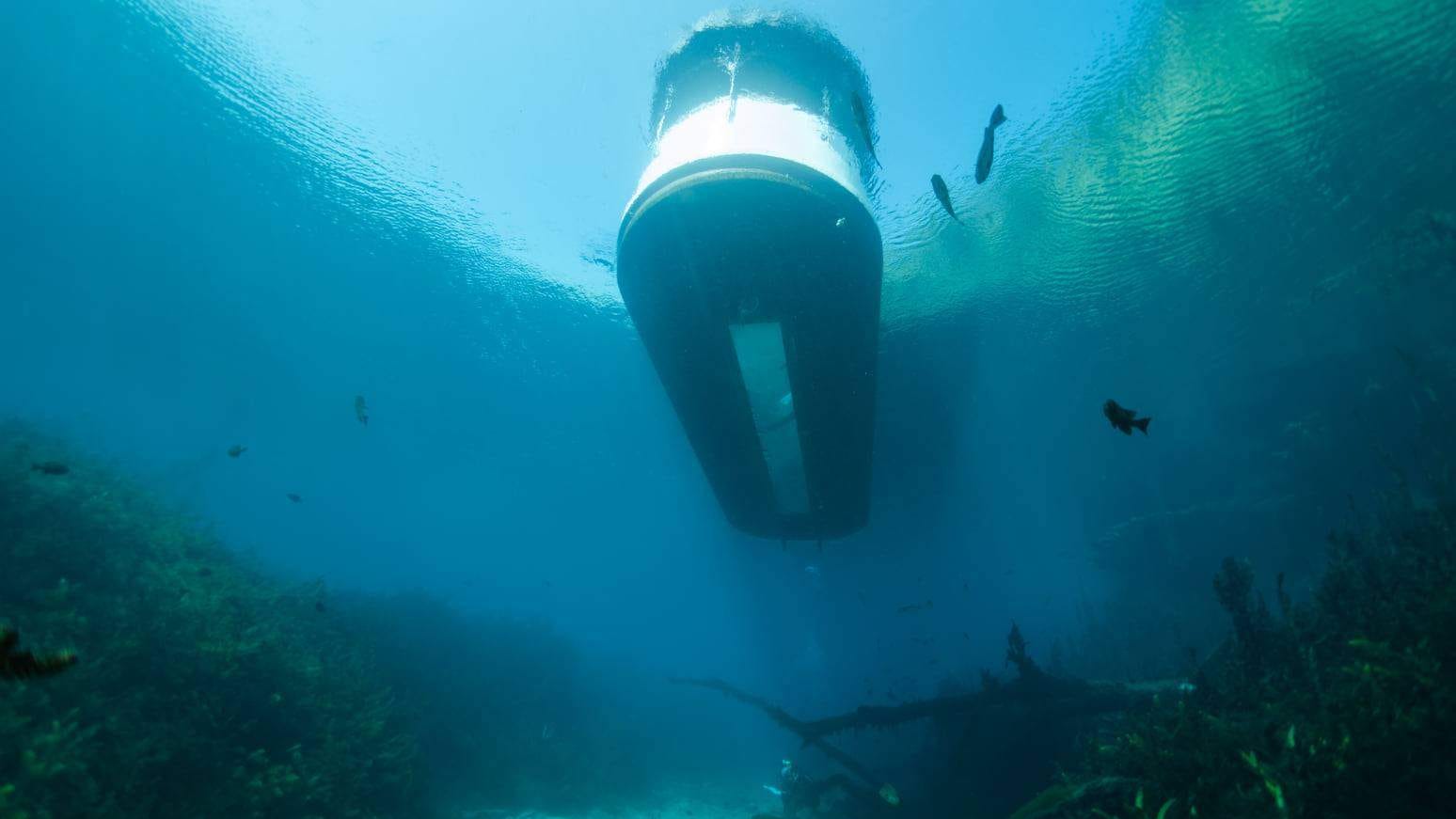
Sometimes it feels like we’re waiting forever. And then, all of a sudden, things just happen. Or do they? If you had asked me, a year ago, while I was painting my banners for the Groundwork series that I’ve just recently exhibited for the first time, first time, how exciting to say that, I would have told you that my dream exhibition space would be the Meadows Center for Water and the Environment on the Texas State campus. That’s because people come from all over the state, school children especially, in order to ride out in the glass-bottomed boats and look down through the bottom of the boat to where the water from the aquifer jets out and into the water of the lake, allowing us to see and experience the amazing interface between the mystical world of the aquifer and the real world that we’re in. So when I was given the opportunity to put the Groundwork banners into the Meadows Center for Water and the Environment starting this week, I should have been thrilled. And, of course, I was, at first. But then I stopped, and I asked myself, is there a benefit to taking it slow? What I want to write about today is about the concept of slow productivity, and why, even though my immediate impulse was to say yes, yes, let me have my dream now, I chose to wait.
You might be familiar with the term slow productivity if you have seen the book Slow Productivity by Cal Newport or have read any number of the productivity posts that are being made about the idea of taking it easy. That’s because productivity is very seductive, but it’s also a dangerous trap. When I’m watching the “Planner YouTube” that I enjoy so much, I can see how much the constant doing, and then the tracking of the doing, and then the checking off of the tracking of the doing, and then the sharing of the checking off of the tracking of the doing, how all of it feels like making our lives into something. As an academic, of course, my ultimate isn’t a Bujo journal. It isn’t my Hobonichi Weeks spread. It’s my CV. And my CV continues to grow. I can print it out and see, oh, look, it’s now 28 pages long. Oh, look, I now have eight pages of presentations, not seven. Look at how productive my 20-year career as an academic has been. But right behind the excitement of the sharing of, the checking off of, the tracking of the doing, there is this exhaustion of proving, of continuing to prove, of every day proving, look, see? I’m good enough. And this reveals the dark side to the productivity performance.
The season of autumn, for me, is a season where I think about the metaphors provided by the snake, and I chose the snake because the snake travels between the upper and the lower worlds, because the snake engages in an activity for its own health and protection that is metaphorically illustrative. The snake will shed its skin. At a certain point, the snake grows too large for the container that it’s currently in. And even though that container is kind of a wearable Bujo planner with all the life activities of the snake marked in etching on its own very skin, it will, in fact, slough the skin away, exposing a new, tender self underneath, and leaving that entire previous being behind, as what is now obvious, a paper thin and flaccid sheath, not a whole life.
So when I was thinking of my impulse to say yes, and right behind it, my realization that I needed to say no, I wanted to look at where this pressure to do it now, to have the next thing, where that comes from. And a bit of thinking back and forth, of course, I was able to get right to the good old-fashioned Protestant work ethic. Some of my friends tease me a bit, but I am probably one of the most Protestant people they know. And my very conscientious and scholarly German Protestant upbringing, including two years at a Protestant college, means that I know quite a lot about the Protestant worldview. I know a lot about how the Protestant worldview underlies the larger worldview that we all share without even realizing where it comes from. And, of course, the challenge of the Protestant worldview is that in the Protestant worldview, rest is sin, and working is evidence of our favor with God.
As I have thought about it, the productivity under the Protestant work ethic worldview, it isn’t just burnout, okay? It is walking ourselves to the stake and lighting ourselves on fire to prove that we’re good. To use every last breath to prove that we’re worthy, to prove that we’re in favor with God. So when we measure our worth in our output, in how brightly we can burn when we light ourselves on fire, we’re showing that our value is contingent on our production. Our value is contingent on, to get all Protestant here, our works, and we’re revealing the soul-deep anxiety that we must earn our right to exist. But, of course, right behind that is the Protestant concept that we must always, always remember to pull to the front when raised in a Protestant worldview, and that is that our “right to exist” is because we are a creature that has been created, end of. Our existence is a gift we were given, not a right at all, not a right that we earned.
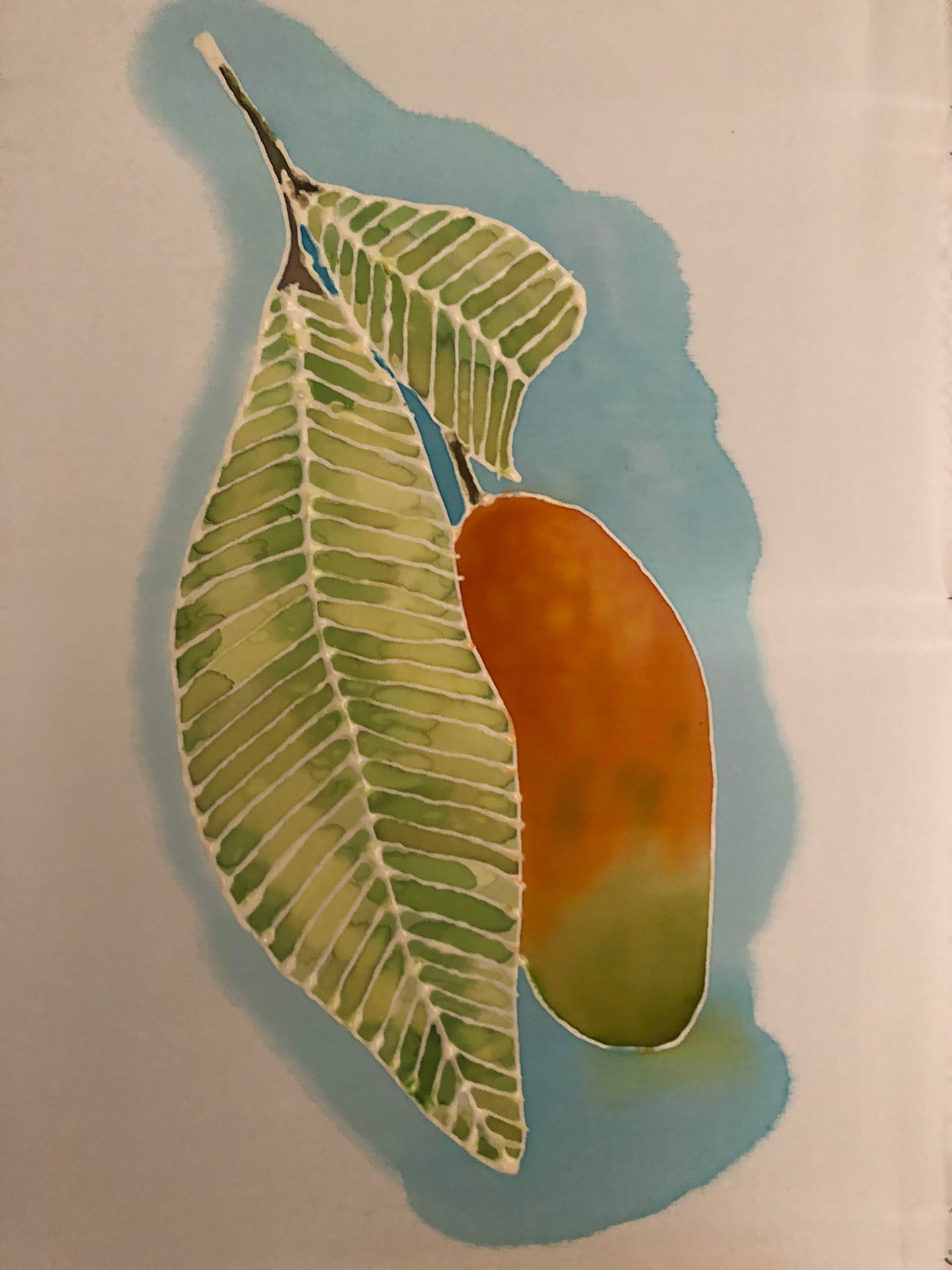
Now, in contrast with this desperation to have fruit, to show that we are good, and that we have the right to be here, that we have the right to the good things in our life, we could think about other worldviews that take a more ecological approach, and ask us to think about, wouldn’t there be fruit when the fruit is ripe, and if there is no fruit, is it possible that the fruit is not ripe yet? That we don’t need to force the fruit. We can allow it to ripen sweetly on the vine, and only pluck it when it’s really ready.
I asked to postpone my exhibition until spring, in part, because spring is the season of emergence. It’s the season of the evidence. And this makes it the perfect time to have any exhibition. But I also chose to wait until spring because there are things I could be enjoying in the time between now and when I make this second exhibition. I could enjoy writing to my friends and inviting them to come. I could enjoy not having to hassle the facilities people who are going to have to be involved when using a venue of this type. Instead I can know that I have enough time to allow everyone to do their best work. The concept that Cal Newport shares in his book, Slow Productivity, is that we should do less. We should do this less in a natural timeline, and we should focus on quality first. And if I do this, then the highest quality of my exhibition is one where I allow the time for it to wait. That was an easy choice once I took a moment to take a breath and think about what mattered to me.
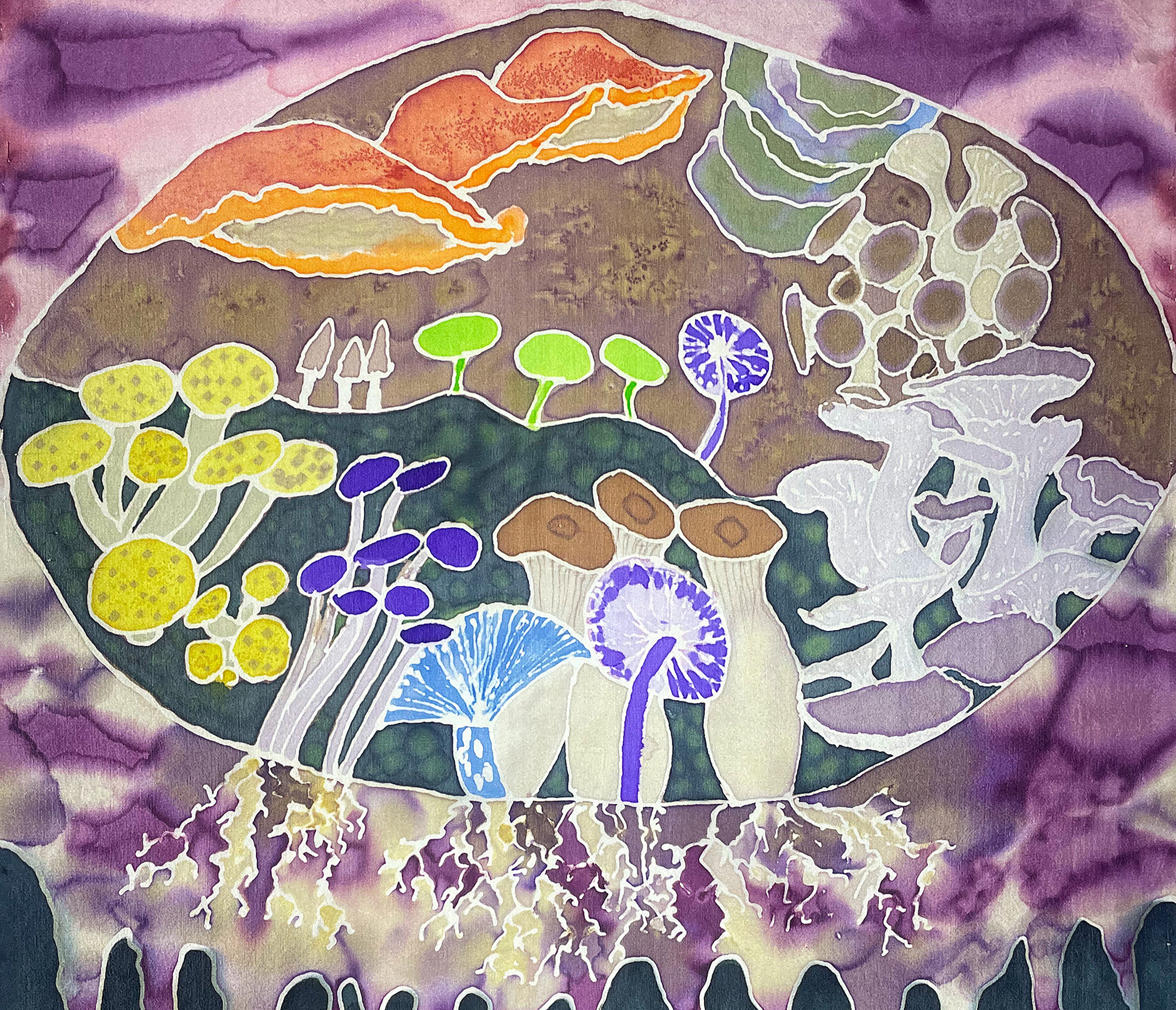
But it left me with lingering questions. Why was I so eager to take the very next opportunity to prove how good I was? Are there other ways of being, other ways to think about my worth? I’m enjoying reading a book by Robin Wall Kimmerer called Braiding Sweetgrass. I’ve only just gotten started on it, and so I can’t share yet how her approach using the Indigenous wisdom of her family and the botany and plant ecology that she studies as a professor can feed my own thinking about the aquifer. But I have read enough to know that she talks about how the Indigenous approach to life emphasizes reciprocity over productivity, and the thoughtfulness of how we participate in the web. And this leads me back to another thought that I had long ago in Christian college, that the savior of the world came to save the world, and that I am part of the world, that my relationship to the rest of the world is what matters. It is my participation in the web. Other worldviews share this. Buddhism, for example, has a concept of interdependence and an emphasis on the idea that we already belong, that we’re already worthy. And, of course, nature teaches this in other forms, such as the mycorrhizal network. My identity as a human is felt most, or is the most, at the interface between me and the rest of the natural world. I am, we are where we touch each other, where we touch the natural world, where we meet with each other, not in the burning of our essential selves, but in the sharing of our essential selves.
So looking at this snake, when the snake molts its skin, it reveals a new fresh skin underneath, one that is more permeable, more receptive to the web, one that is, just for the moment, perfectly snake. But in the next moment, ready to be touched, to be scored, to be scarred by its participation in the world. This is where the real exchange happens. When I shed my need to be good and perfect in myself, and accept my need to be part of a good and perfect world.

So I’m going to wait for spring. It’s not because I’m waiting to be worthy. I am already worthy. It’s not waiting so that I can be more productive. I am already as ripe and fruitful as I will remain my whole life. It’s really more like waiting for Christmas, for the sweetness of anticipation, knowing that at that moment, when I can share with others what I’ve done, only in that moment does it become what it truly is. What are you waiting for? What are things that you realize will only be the best when you can share them with each other, when you can sit together and open each and every gift that life has given you? Share that with me in the comments.
Thank you for reading what emerges from my process.
Gwendolyn
I loved reading this so much!