
Salamanders are Real
When Mythology Gets It Wrong

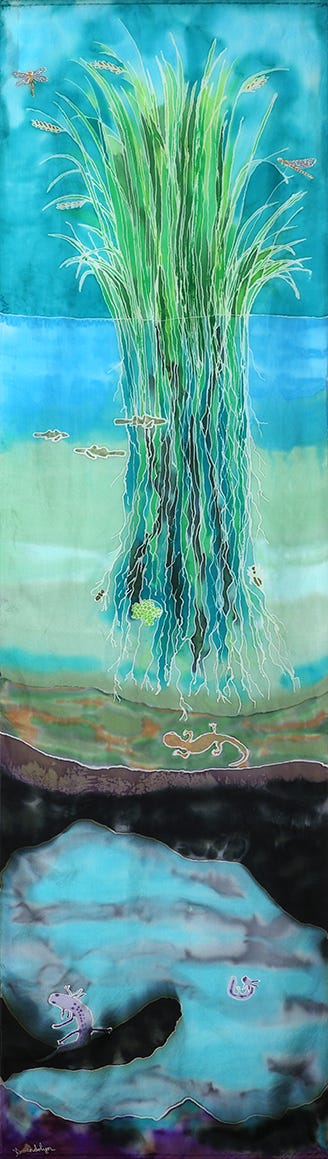
At the bottom of my Wild Rice Banner are two different amphibians, both creatures whose endangered status means they serve as guardians of the San Marcos River by legally preventing over-pumping that would further deplete their habitat. The Texas Blind Salamander has an amazing story, it was discovered in the 1890s when workers drilling a well hit an artesian chamber that is part of the larger limestone complex that feeds the San Marcos River. The white salamanders, with red spots where their eyes should be and permanently extended red gills, live in eternal darkness, but that day were sucked up into the light for the first time. So rare, they only live right here in the caverns of our spring and hunt by sensing the subtle changes in the current in the warm but hidden channels of their caverns.
Their smaller cousins, the red brown San Marcos salamander, are less rare, living in Spring Lake and the first stretches of the river. But both species are vulnerable to more than changes in the water level. Their extremely thin skin means they live almost in union with the water of their home and are exquisitely sensitive to any chemicals or pollution that might enter the aquifer or the river. An improperly conducted oil change in an uphill yard, the casual dumping of cans of paint, while the water will eventually run clear, the wrong poison at the wrong point and these unique creatures will be gone forever.
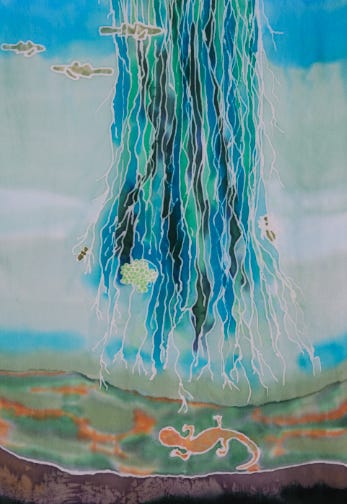
What makes the salamanders additionally interesting is their history as an alchemical symbol of a completely different element from the water they make their home. The salamander is a symbol of fire in European alchemical mythology. But this starring role was probably given to them completely by mistake. Paracelsus (1493-1541) was a Swiss philosopher who contributed to our development of medicine and is known as a “father of toxicology”. In his posthumously published book “A Book on Nymphs, Sylphs, Pygmies, and Salamanders, and on the Other Spirits,” he repeated an assertion made by Aristotle much earlier, that Salamanders were actually created by fire. The source of this myth is likely because the mucous coated skin of salamanders would allow them a brief time to escape when the damp logs they favored for habitat were placed on a fire. The fact that the dampness of the log would serve to lower or extinguish the fire added to this misimpression, since the lowering of the flame would occur just at the moment that amphibians would rush away, drawing attention to their escape.
When sketching out a seasonal creative system, I chose goddesses, elements and even minerals to represent each season. I have designated Autumn as the season of fire in my personal seasonal mythology because I see autumn as a season of transformation and fire leaves behind rich material to nurture change even while creating the change we sometimes fear. And, while the symbolic creature I have chosen to consider is the snake, the connection of salamanders to fire gives me a chance to consider the lessons they might teach as well. But in this case, the lesson of the salamander is very straightforward. The habitat they need to survive is rich and beautiful, the same that we need to survive, and what threatens them, threatens us.
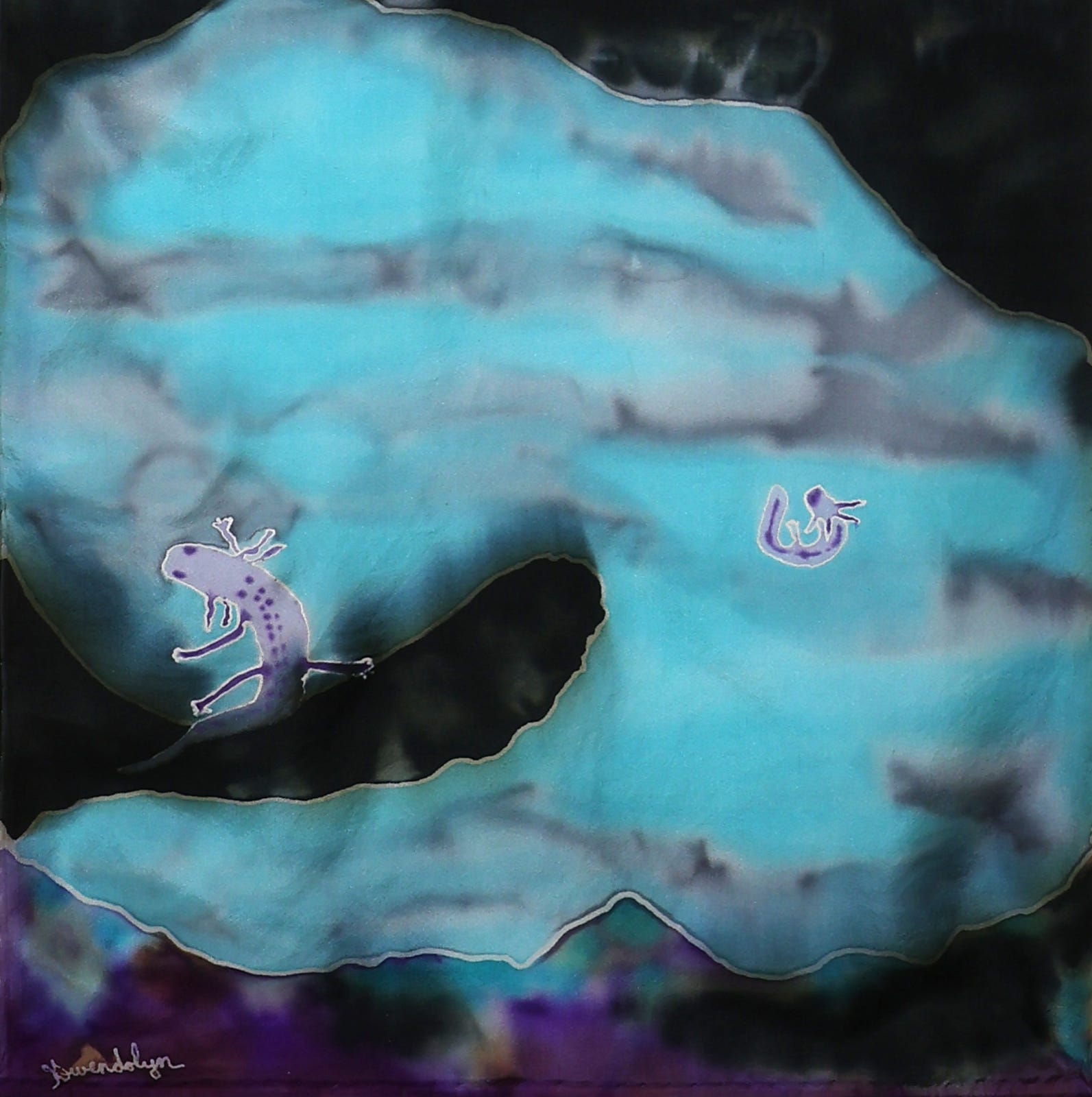
The lesson they share is about us, as creatures, that we can so completely misunderstand what is actually happening and choose a creature of the water to symbolize fire in an early incarnation of chemistry. The father of toxicology told us that salamanders have a special power to protect themselves, but their are in fact, specifically vulnerable to toxins. What we wanted to believe about their fire-proof nature is exactly the opposite. And this can often happen, our desire for a beautiful mythology can sometimes hide important truths that are vital to our survival. In an age of science misinformation, we see this happening around us all the time, could the easily spread myth that a certain new medical treatment caused cancers hide the fact that it actually prevents cancers? Is the truth of a scientific system in details we would never consider unless our drill hit the exact cavern in the well of reality?
Salamanders don’t belong on a list of mythical creatures like sylphs or nymphs or even mermaids, they belong right where they are, in the riverbed and caverns of the spring. But the real fires, the drought from over-pumping, the loss of rainfall from changing climate patterns, the salamander won’t survive this transformation any more than we will. In the fire of our own lives, it is tempting to believe in a creature that can scamper away unscathed, but science tells us this story is not true.
In our quest for transformation during the season of Autumn, a few vulnerable parts of ourselves need to be carefully lifted out of the way and set safely aside, to live out their symbolic lives in the warm dark of our inner lives. The delicate nature of salamanders is not a weakness but wisdom. They are teaching us to pay attention, to recognize danger, to protect what is vulnerable. Sometimes the most magical thing is not invulnerability but sensitivity. Protecting what we know is weak about ourselves means protecting the ability to register what’s wrong before it’s too late. In the last few weeks of Autumn, I am going to spend some time thinking about something about myself and my creative process that I need to designate as precious. Maybe it is my naive mark making, the wobbly lines in my batik, that I will work hard to actually protect instead of change.
Thank you for reading what emerges from my process.
Gwendolyn