
Harvesting Wisdom
Learning What to Let Go Dormant

Autumn is a season of transition, and I start this autumn with an important change in my work life. Starting this summer, we’ve had significant budget cuts at my university, and I learned just as school started that this has resulted in the elimination of most of the funding for teaching assistants (TAs). Fortunately, my excellent TA Julia, who helped with the program website management and teaching, has just graduated and won’t be out of a job. She was especially good at making Canva images for announcements about career and education events and looking through the photos submitted in-class activities for gems I could share. She did all of this and more in about 10 hours a week, and now I’ll I have to figure out how to make up her lost work with my own time.
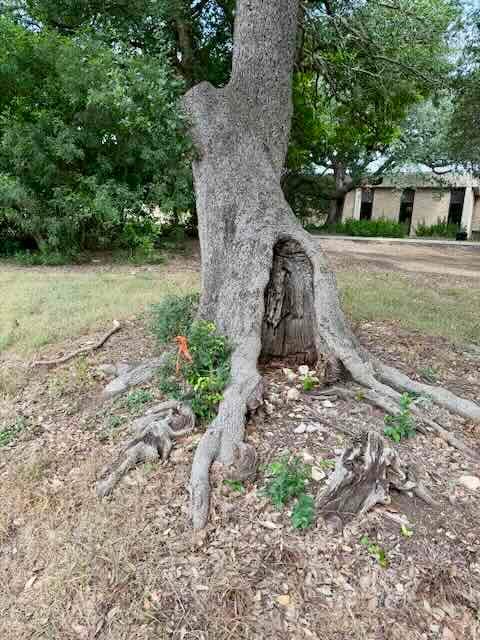
So, I was thinking about this from the perspective of the Season of Autumn. My autumn metaphor isn't just about loss as we prepare for winter, but it's also about harvesting and wise planning. In reflecting on how adapting to the changing seasons can ensure that we have the resources we need for the future, I made my own choice. I am going to be shifting from a weekly post to a biweekly posting schedule in order to really make the best use of my time.
In thinking about this harvest metaphor (and who isn't thinking about it now that pumpkin spice lattes are available). I’m not a farmer, but I worked for farmers back when I was in early college as a field scout. I know that driving down the country roads there in Nebraska in late summer and early autumn, you could drive by one field that had been completely harvested and drive by another field that was still waiting. It depends on the crop, and it depends on the hybrid planted, and it depends on the farmer's plan, their capacity for storing the grain in a silo versus storing it in the field, so to speak. It depends on projections of the weather and how urgent it might be to get the crop out of the way.
All of that means that somebody who's doing wise planning with their resources has to consider these different factors. Thinking about this in relation to my teaching, I need to look over my fields, as it were. With the loss of support, I have to ask myself: what things may not be urgent? My undergraduate assistant helped with deadlines on the website. Do my students really depend on those deadlines? Could I just post one list instead of a set of attractive thumbnail cards? When it comes to my teaching, what things am I doing that are actively high impact versus things that take a lot of my time because I've always done it that way, but may not actually yield anything for my students? Sustainable Fashion Week comes to mind. My TA has supported my production of this series of workshops and speakers for the past three years, but if there isn’t real buy-in from my colleagues or additional students, do I need to explore some other demonstration of our values? I learned a while ago that a good idea is only a good idea if other people want to do it too. If I can’t pass the torch on Sustainable Fashion Week, it might not be a good idea; it might not, ironically, be sustainable.
Now, as I get ready to spend the autumn with my students and my creativity, I'm going to think about different creativity and research opportunities that may need just a little tending. Some, like exploring new exhibition venues, may just need checking on and then left in the field to be harvested later. Or there may be other situations where storm clouds are coming and I really need to get right in there and get them taken care of, like the sewing course I started offering last summer.
And of course, this leads to the key skill that I'm going to have to exercise in this situation, the one that is really hard for me. Turns out I'm a bit of a masochist, a bit of a stoic. I really enjoy suffering, apparently, and I love suffering with the hope that people will notice how noble I am in suffering for my art or for my students. But I need to practice the art of saying no. I need to think through what might be a permanent change in this situation versus something temporary, so that I don't go off half-cocked and cut something that I might want later. And I'm going to welcome this opportunity to really think through: what is the actual focus of my mission? How can I align what I'm doing at work even more strongly with my values now that I have these constraints? If a colleague I haven’t heard from in a while emails to ask if I will collaborate on a new research project, I will have to remember that more is not more; more is less in the end.
Besides this active harvesting, another thing that happens in nature at this time of year is that things go dormant, right? Perennials…they're going to come back next year. And so I also need to look and think through: what is actually going to die and needs to be chopped up and maybe used for fertilizer, and what things could go dormant? Is there an activity in my life that I could bank under some leaves and come back and check on it later? Because, as we know, underground, things are happening. Root systems can strengthen even when the surface looks as if it's dead or dormant. And there's a promise in that dormancy. How much fun is it, right, to move the leaves aside and discover this whole teeming colony of insect life that's producing new fresh soil?
During this time of year, there are some things that naturally go underground. And when I think about my major metaphor, the aquifer, as the heat fades and the draw on the aquifers reduces a bit, the limestone layers can refill, right? I might distill some things I was trying to do in the classroom back to core concepts. I might pick one program retention activity that I believe is really going to help my students and foster retention, instead of engaging in a bunch simply because I have the help to do it. In the example I mentioned before, I can think about ways that I could use my skills with the website to focus on the essentials, instead of trying to show everybody how my website is head and shoulders above the others.
In the future, I might see that this budget cut actually revealed some essentials, right? Gave me some information about what I'm doing that's important. Some things were ornamental, right? A beautiful-looking border versus a really healthy apple tree. Is a second or third project essential or is it ornamental? And here is the clarity.
Has writing a weekly blog been essential? I'm going to have to say at the moment, “no”. It has been useful for me to work out my ideas related to my concept of the aquifer. I feel like I have generated a lot of fertility here, and I suspect that these ideas that I have planted will flower next year. Pruning improves the stock, and it is possible that pruning back my blog posts here will improve their quality. The things that I cut down at the moment, such as writing a post for you every week, will lay and molder and provide rich fertilizer for something in the future.
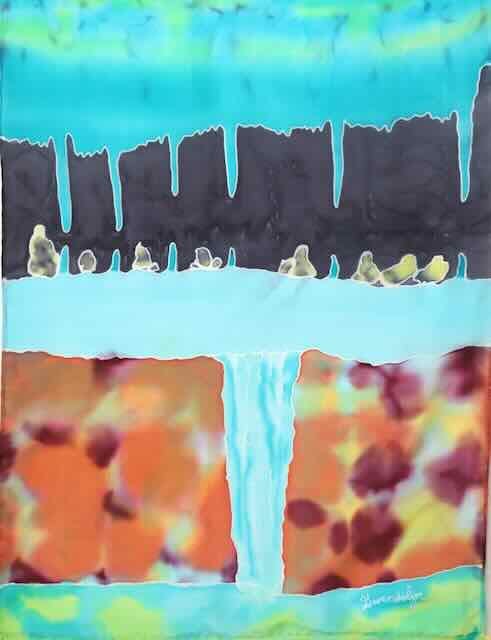
Scarcity teaches us the value of what's being stripped away, and in this case, the value of what remains. And what remains is the satisfaction of working with my students. And honestly, as somebody who apparently is a bit of a masochist, the satisfaction of making do, of being frugal, of doing something amazing with not very much has always thrilled me. We know from creativity theory that constraints often promote greater creativity. I know this to be true in my own artistic practice. The jurist at the recent show here at the San Marcos Art Center selected my work to feature in the Winners Showcase. His comments shared his reflections on what I showed I could do within the very narrow constraints of batik on silk. Without saying this, he recognized I had made the choice to stay with a restrictive medium in order to understand how I could express my ideas using just dye and resist. My work grows out of resistance.
Next, I’m going to embrace this season. Pulling on the cloak of adaptability. Lifting my head with dignity, realizing that times of abundance gave me the opportunity to do quite a lot, to produce a lot of fruit. But now that the fruit has fallen, I can adapt and use the decay of abandoned projects and tasks to provide rich fertilizer for the future, even if I am not growing as many things in my garden, so to speak.
Of course, I invite you to think through this metaphor and engage using the comments. What portion of the abundance of growth in your life will you harvest and what will you let go dormant to wait for later or to serve as fertilizer for the future?
Thank you for reading what emerges from my process.
Gwendolyn